Sunshine Island : Farming Game
- 4.6
- Rating
- 10.00M
- Installs
- Free
- Price

 Analysis by App-foxy
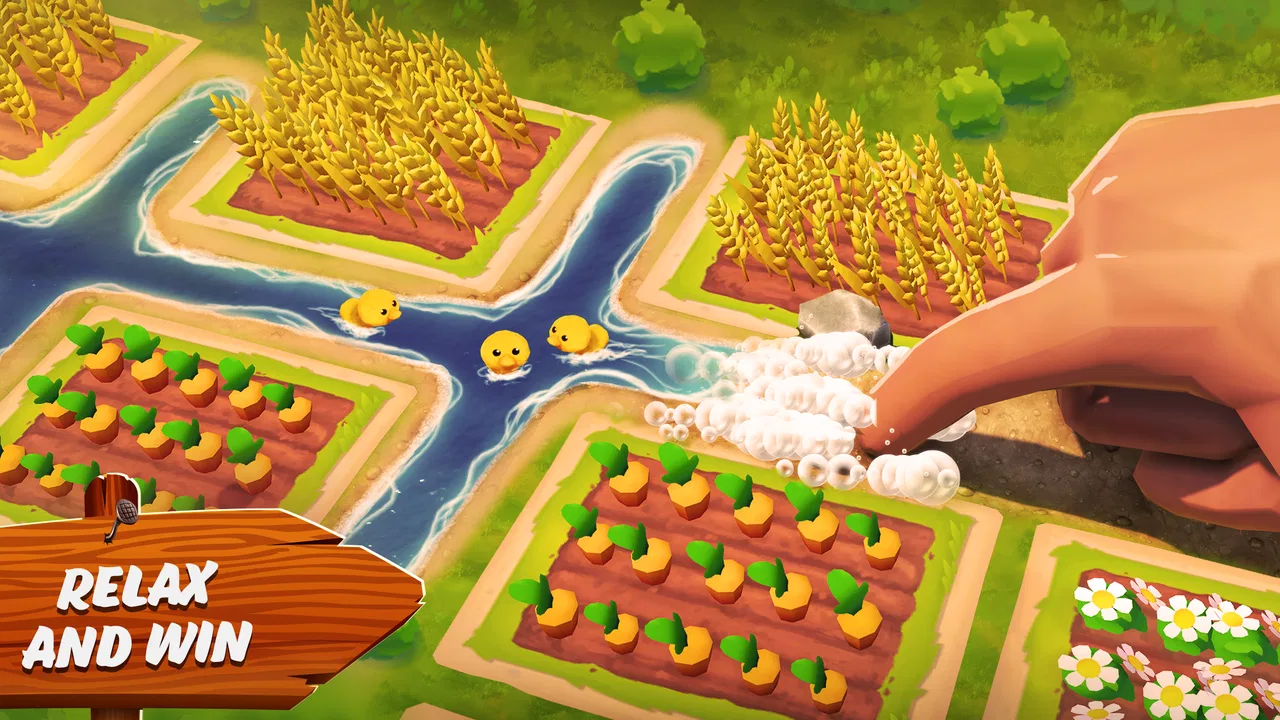
I spent time with Sunshine Island: Farming Game as a relaxed island-building simulation, and my first impression was that it understands the appeal of a small daily routine. You clear space, grow crops, look after animals, collect materials, and gradually make the island feel more useful and personal. It is not trying to be a demanding strategy game every minute. Instead, it gives you a series of manageable jobs that fit naturally into short visits.
That makes it easy to recommend to someone who likes farming games but does not want every session to feel like a race. The bright presentation and gentle setting are inviting, while the familiar loop gives you enough planning to stay interested. At the same time, I would not describe it as a completely hands-off experience. Progress still depends on choosing what to do first, keeping production moving, and accepting that some goals take patience.
Developed by Goodgame Studios, this free simulation game is rated for Everyone and runs on Android devices using version 8.0 or later. It has built a sizeable audience, with more than five million installs and a 4.7 average from roughly 154 thousand ratings. Those figures suggest strong appeal, but they do not remove the need to decide whether its particular pace suits you.
You May Also Like

 Blood Strike: 2.5 Anniversary
Blood Strike’s Loadouts Turn Every Drop Into a Tactical Gamble
A close look at Blood Strike’s custom loadouts: how fast access to signature weapons reshapes its battle royale rhythm, rewards preparation, and narrows the gap between fights.

 Pandora - Music & Podcasts
Pandora’s Music Is Easy to Start, but Harder to Recover
Pandora’s strength is its low-effort path from a seed to a station. Its weak spot is how much confidence it asks you to place in connection, setup, and quiet recovery.

 8 Ball Pool
 Is Built on Rivalries, Rematches, and Routine
A close look at the rivalries, rematches, shared routines, and unanswered safety questions that turn a quick pool match into a persistent mobile community.

 Samsung Music
’s Quiet Strength Is Playing What You Already Own
Its reach comes less from spectacle than from dependable access to a personal library. That simplicity is both the app’s strongest retention engine and its ceiling.

 AccuWeather: Weather Radar
AccuWeather Review: A Quick, Clear Forecast for Everyday Decisions
For everyday plans, the best forecast is the one you can understand quickly. AccuWeather makes rain timing, radar, and local conditions easy to act on, with a few trade-offs.

 Hill Climb Racing
Why Hill Climb Racing Still Turns Crashes Into One More Run
A tiny car, a bumpy hill and one more upgrade: Hill Climb Racing keeps resurfacing because its simple chaos makes every near-miss feel personal.
More From Our News Desk



How the island routine works in everyday play
I find that a useful way to approach the island is to decide on one priority before opening it: keep the farm running, or make progress toward a bigger improvement. That small choice can make a brief visit feel focused instead of hurried, especially when I have only a moment to check in. It also sets up the next question: how comfortable are the screens and controls to use?
A simple loop that rewards returning at the right time
My usual session begins by checking what has finished and what can be started next. Harvesting crops or collecting from animals is satisfying because it immediately turns a quiet island into a productive one. I then look at the next task rather than tapping through everything without a plan. That small pause matters: the game becomes more enjoyable when I treat the island as a sequence of jobs instead of a collection of buttons.
The core appeal is the combination of farming and gradual development. Crops provide a dependable activity, animals add another reason to revisit the island, and the wider farm setting gives those actions a clear purpose. I like that the game can be played in a few minutes when I only want to collect and restart production, but it also leaves room for a longer session when I feel like organizing my priorities.
A realistic example is a weekday morning before work. I can open the game, collect completed items, begin the next available cycle, and spend the remaining time on one construction or expansion objective. Later, during a break, I can check whether another task is ready. This routine feels more comfortable than a game that demands a long uninterrupted session, although players who dislike waiting between actions may find the rhythm slow.
What to do first when the island feels busy
When several activities are available, I recommend starting with anything that takes time to complete. Beginning a longer crop or production task before closing the game makes the next visit more productive. Short actions are better saved for the end of a session, because they are easier to finish immediately and less likely to leave the island in an awkward half-completed state.
I also found it useful to separate “keep the routine alive” tasks from “make visible progress” tasks. The first group includes collecting and restarting regular activities. The second includes working toward a larger improvement. If I focus only on the first group, the game can feel repetitive; if I chase only the larger goal, I may neglect the steady resources needed to reach it.
This is one of the less obvious strengths of the game: it supports a personal tempo. A casual player can simply maintain the farm, while a more deliberate player can plan each visit around a target. The game does not need to become a spreadsheet to reward attention, but a little organization makes the island feel much less cluttered.
Settings and habits worth checking
I would begin by checking the device’s notification and sound preferences before settling into regular play. A farming game is easier to enjoy when reminders are helpful rather than intrusive. If alerts interrupt your day, reducing them at the system level can make the experience calmer. If you rely on reminders to return at a useful moment, keeping only the notifications you genuinely want is a better compromise than allowing every prompt.
Sound is another personal choice. The island atmosphere can make a short session feel pleasant, but I often prefer a quieter setup when playing in public or while listening to something else. The important point is to adjust the game around your routine instead of letting the routine revolve around every possible reminder.
I would also keep an eye on the version installed. The current version is 1.3.31951, and using the current release is sensible for stability and compatibility. On an older device, I would close other demanding apps before playing if the island feels less responsive. The minimum operating system is Android 8.0, so users with older phones should check compatibility before planning around it.
Because the game is free to download but includes optional purchases ranging from $0.99 to $149.99 per item, I recommend deciding on a personal spending rule before playing. I prefer treating purchases as a convenience rather than part of the basic routine. Turning on purchase authentication through the device’s store settings is a practical step, especially if children use the phone. The age rating is Everyone, but that does not make spending decisions automatic.
Small workflow changes that make progress smoother
The most useful habit I developed was ending every session with a deliberate restart. Before leaving, I check whether I have collected completed work and whether the available spaces are being used. This sounds basic, but it prevents the common mistake of returning later to find that the island has been idle for no reason.
I also avoid spending everything immediately. Keeping a reserve of useful materials gives me flexibility when a new task appears. In a game built around farming, animals, and island development, the temptation is to improve whatever is visible first. Saving some resources instead lets me respond to the next requirement instead of having to rebuild my supply from zero.
Another effective pattern is to group similar actions together. I collect from one area, review the next needed item, then move to the next area rather than constantly switching between unrelated tasks. This reduces the feeling of busywork and helps me notice which part of the farm is becoming a bottleneck.
For players who use a larger phone or tablet, I would keep the device orientation and touch setup consistent. Familiar positioning makes repeated collection less tiring. I do not see a reason to chase speed for its own sake; the better goal is fewer unnecessary taps and a clearer view of what deserves attention.
Where experienced play helps—and where it stops helping
Planning improves the experience, but it cannot remove the game’s underlying waiting and progression limits. A careful player can start tasks at sensible times and avoid wasting opportunities, yet some development still requires patience. This is important because the island can look as though it should advance faster once you become organized. In practice, better habits make the pace feel cleaner, not necessarily quicker.
That trade-off separates this game from more competitive farming or management titles. If you want deep economic optimization, complex production chains, or constant strategic pressure, this may feel lightweight. Its strength is approachability. The game gives me enough decisions to stay involved without turning every crop into a high-stakes calculation.
I also think the free-to-play structure deserves honest attention. A player who refuses all purchases can still approach the game as a gradual hobby, but someone who expects instant access to every improvement may become frustrated. The large upper end of the purchase range makes it especially important to play at your own pace and avoid treating convenience as a requirement.
Compared with a traditional offline farming game, this island experience feels more suited to short, repeated visits than to one long uninterrupted campaign. Compared with a highly competitive management game, it is friendlier and less intimidating, but not as demanding. Compared with a purely decorative island builder, it gives farming and animal care more importance, so your choices feel connected to ongoing production rather than only appearance.
Who will enjoy it most
I think it is a strong fit for players who like gentle progression, colorful farm settings, and routines that can be checked several times a day. It also works well for people who enjoy having a long-term project on their phone without needing to memorize complicated rules. The Everyone rating makes it approachable for a broad audience, while the simulation category gives it enough structure for adults who want more than a simple tapping toy.
It is particularly suitable if you enjoy deciding what to start before leaving the game. That one habit turns short visits into meaningful progress. It is also a good choice for someone moving from a simpler farming title toward a more developed island setting, because the basic actions are easy to understand while the longer-term organization adds depth.
I would suggest skipping it if you need immediate action, dislike timers and gradual goals, or want a game that can be fully completed in a few concentrated sessions. It is also not ideal for anyone who finds optional purchases distracting. Even when I ignored them, their presence shaped the game’s sense of convenience, and that may bother players who prefer a single upfront purchase.
Questions I would ask before installing
Will it work on an older Android phone? It requires Android 8.0 or later, so the operating system is the first thing to check. Performance will also depend on the device, but keeping the phone’s software current and closing unnecessary apps is a sensible preparation for any game with a lively island scene.
Can it be played casually? Yes, and that is where I think it performs best. A few minutes can be enough to collect finished work and begin the next cycle. However, casual does not mean completely passive. Returning with a small plan makes the experience more rewarding than opening it randomly and tapping whatever happens to be available.
Do I need to pay to enjoy it? I did not treat spending as necessary for the basic farming routine. The game is free, but optional items cost from $0.99 to $149.99 each, so players should be comfortable with a gradual pace or set clear purchase limits. If you want every convenience immediately, the free structure may feel less comfortable.
Is it better for children or adults? The Everyone rating makes it accessible to children, but adults should still guide younger players around in-app purchases. For adults, the appeal is less about difficulty and more about maintaining a small, pleasant project. I would describe it as family-friendly in presentation while still offering enough planning to keep older players involved.
Does it replace a deeper farming simulator? Not completely. It is better for approachable island management and short sessions than for intricate simulation. If your favorite part of farming games is complex market analysis or highly detailed production planning, another title may suit you better. If you prefer a warm setting and a repeatable routine, this one is more convincing.
My final view after settling into the routine
Sunshine Island: Farming Game works because it makes ordinary progress feel pleasant. Growing crops, caring for animals, and improving the island are familiar ideas, but the game’s real value comes from how comfortably those activities fit around a person’s day. I enjoyed it most when I resisted the urge to rush and instead treated each visit as one step in a longer project.
Goodgame Studios has made a simulation that is easy to approach and flexible enough for different playing styles. Its 4.7 average from around 154 thousand ratings and more than five million installs reflect that broad appeal, while the free entry point makes trying it straightforward. Still, the optional purchase range means I would install it with a clear idea of my own limits.
My recommendation is simple: try it if you want a friendly island farm that rewards repeatable habits, sensible timing, and gradual improvement. Keep production moving before you leave, save some resources for the next objective, and adjust notifications so the game supports your routine instead of interrupting it. If you need a fast, fully open-ended simulator or dislike waiting-based progression, choose a different kind of farming game. For everyone else, this is a polished and approachable way to turn a few spare minutes into a small island project.
FAQs for Sunshine Island : Farming Game
01What is the main objective of Sunshine Island: Farming Game?
Sunshine Island: Farming Game is centered around building and managing your own farm on a tropical island. Players engage in activities such as planting crops, raising animals, and trading goods. The aim is to expand your farm, unlock new features, and create a thriving agricultural empire while enjoying the vibrant island setting.
02Is Sunshine Island: Farming Game free to play?
Yes, Sunshine Island: Farming Game is free to download and play on both Android and iOS platforms. However, it does offer in-app purchases for players who want to enhance their gaming experience or speed up progress. These purchases are optional and not necessary to enjoy the full game.
03What kind of in-app purchases are available in Sunshine Island?
In Sunshine Island, players can purchase various items such as premium currency, special seeds, or decorative elements to personalize their farm. These purchases can help accelerate game progress or unlock unique features. While they can enhance the experience, they are not essential for gameplay success.
04Can I play Sunshine Island: Farming Game offline?
Sunshine Island: Farming Game requires an internet connection to play. This is essential for syncing game progress, accessing social features, and participating in events or updates. Players should ensure they are connected to Wi-Fi or have a stable data connection for the best experience.
05Are there social or multiplayer features in Sunshine Island?
Yes, Sunshine Island includes social features that allow players to connect with friends. You can visit their farms, trade goods, or compete in friendly challenges. These features add a social dimension to the game, encouraging collaboration and competition among players globally.
Pros
- Beautiful graphics and animations.
- Engaging storyline and quests.
- Variety of crops and animals.
- Intuitive controls and interface.
- Offline play available.
Cons
- In-app purchases can be pricey.
- Requires frequent updates.
- Some tasks can be repetitive.
- Limited customization options.
- Energy system restricts playtime.

Sunshine Island : Farming Game
Gallery